
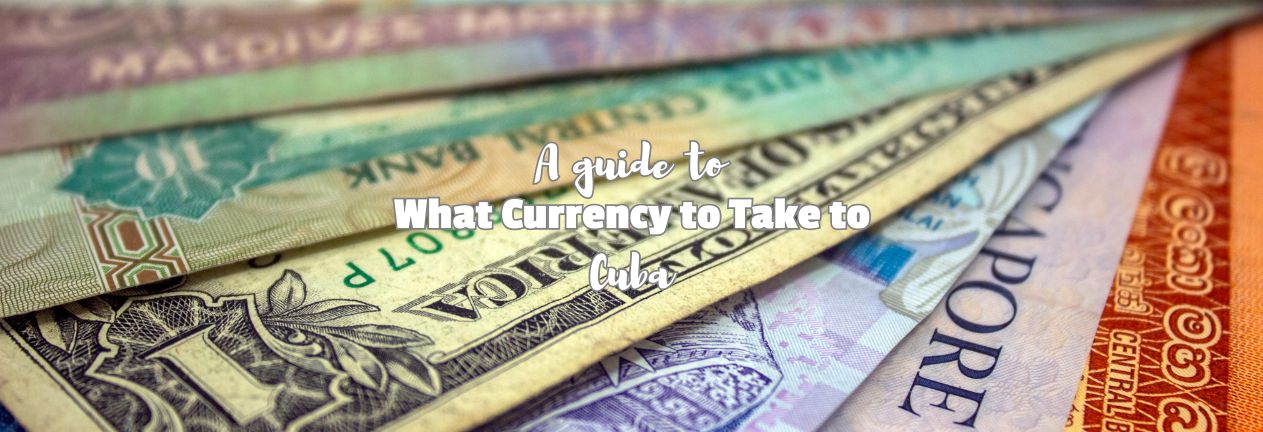
Once you understand that Cuba uses the Cuban Peso (CUP), that it is a closed currency and that cards don’t always (ever if you’re American) work in Cuba, then the next question is obvious: what money should you actually bring with you? And this spawns so many questions. Not all foreign currencies are equal in Cuba. Some are easy to exchange. Some are inconvenient. Some will quietly cost you money each time you exchange them. Add in the fact that US bank cards don’t work, ATMs aren’t always reliable, and exchange rates matter more than you might expect, and suddenly the question of what currency you should take to Cuba in 2026 is decidedly important. So let’s make it simple. Here’s exactly what currency to take to Cuba, depending on where you’re traveling from, where you’re traveling to, and how you are traveling.
THIS POST MAY CONTAIN COMPENSATED AND AFFILIATE LINKS. MORE INFORMATION IN OUR DISCLAIMER
You Should Bring Cash to Cuba
Before we even get into which currency to take to Cuba, let’s be clear about one thing: you SHOULD bring cash. Cuba is still largely a cash-based economy. If you’re traveling from the United States, cash is your only reliable, realistic way to pay for things. If you’re traveling from elsewhere, you may be able to use a card in some places, but you should never rely on it.
You also cannot buy Cuban Pesos outside Cuba. It’s a closed currency. ATMs exist. Cards sometimes work. They definitely don’t if you’re from the USA. But planning to depend on them is a risk. Arrive with usable cash.
PRACTICAL TRAVEL TIPS
- 🛡️ Get Travel Insurance: Civitatis includes medical expenses, repatriation, theft, luggage delays. No deductibles or upfront payments. Get a quote here. .
- 🛂💻 Buy your Cuba eVisa here.
- 🔌 Be ready for the plug, socket & power situation.
- 📶 Internet, maps, data on the go. Buy an eSim for Cuba. Or pre-order a physical SIM card
- 🔒 Do NOT leave home without a VPN. Buy for your trip here.
What currency to take to Cuba
I lose count each month of the number of times this question is asked. And the answer is pretty much the same every single time. It depends. It depends on where you’re coming from and how you’re traveling. So here’s the detail on which currency to bring to Cuba.
What currency to take to Cuba if you’re coming from the United States
Bring US Dollars if you’re traveling from the USA to Cuba. There is no advantage at all in converting your US Dollars into another currency before you travel. US Dollars are widely accepted in Cuba and are easy to exchange, both officially and informally.
If you’re American, your credit and debit cards issued by US banks will not work in Cuba. That means you need to bring enough cash for your entire stay, as there is no other way for you to pay here. Read my guide to legal travel to Cuba to understand the other restrictions you have on your travel.
You should bring a mix of denominations of bills. You will likely get a better exchange rate with larger bills, even US$100. Whatever the denomination, you should ensure that your notes are pristine. No rips, no tears, no dirt.
Bring:
- A mix of larger bills (for exchanging)
- Some smaller bills for tips if you’re planning on staying at a resort or hotel
- ALWAYS bring newer notes that are clean and undamaged
How much money should you bring to Cuba? Read my guide to budgeting and more here.
What currency to take to Cuba if you’re coming from Europe
Bring Euros if you’re coming to Cuba from Europe.
There’s no reason to convert your Euros into US Dollars before traveling. You’ll lose money in conversion fees and gain little in return. Euros are widely exchanged and commonly accepted.
In some parts of Cuba, Euros are just as desirable as US Dollars. In others, it varies. But from a practical standpoint, Euros work perfectly well.
Keep it simple: bring your home currency. And again, bring a mix of notes that are pristine. Do NOT bring coins. Cubans can’t do anything – other than exchange them with other Europeans – with Euro coins.
What currency to take to Cuba if you’re coming from Canada
Bring Canadian Dollars if you’re coming to Cuba from Canada. I would also bring a few US Dollars, just because I’m cautious, but if you can’t get hold of them, don’t worry.
Canadian Dollars are commonly exchanged in Cuba, and there’s usually little benefit to converting into USD first. You’d simply lose out on unnecessary exchange fees. As always, bring clean notes and a mix of denominations.
Again, notes should be clean, unmarked, and do NOT bring your loonies and twoonies. But help out a Cuban if you find one with lots of them, by swapping them out for your notes.
What currency to take to Cuba if you’re coming from the UK, Australia, New Zealand, or elsewhere
This is where you need to think ahead. While some currencies can technically be exchanged at official institutions, they are less widely traded on the informal market. That usually means:
- Fewer exchange options
- Less flexibility
- A potentially weaker value
If you’re traveling from one of these countries, it’s often simpler to convert your money into either:
- US Dollars, or
- Euros
before you leave home. Stick to these two. It makes your life easier once you arrive.
You will (most) likely be able to exchange your Pounds Sterling, Australian Dollars, and New Zealand Dollars at the airport and at Cadecas in major cities, but 99% of the informal market – both exchanging and paying for things will NOT be interested.
Now that we’ve covered what the best currency to bring to Cuba is based on where you’re coming from, let’s address a few more questions on currency, Cuba, and payments.
Cuba, Currency, Foreign Currency, and Payments
How you use your foreign currency in Cuba is important, and if you use it smartly, you’ll have a more cost-effective experience in Cuba.
What’s the best currency to use in Cuba?
Whichever currency you bring to Cuba, it’s better to exchange it for Cuban pesos and use the pesos to pay with. The exception to this might be your taxi from the airport if you didn’t pre-book a transfer.
It’s best to exchange your foreign currency for Cuban pesos and pay in Cuban pesos. Don’t change it all in one go; change enough for a few days, or a week, then change some more. US$100 (or the equivalent) each time, is a good measure.
It is best to change your foreign currency to Cuban pesos because you will get more value from it. Read on for more details on exchange rates and why this matters.
If the idea of carrying a wedge of cash around with you for the entirety of your vacation isn’t great, then be sure to get yourself a portable travel safe. My top pick – and the one that we use – is here (it’s big enough for two laptops, kindles, our camera, and all our associated valuables. If you want other alternatives, then read my guide here about how to use them and why we use them.
TOP PRODUCT PICK
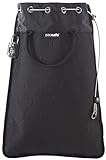
Best Portable Travel Safe for Cuba
This fabulous portable travel safe is big enough for laptops, phones, cameras, and a whole lot more. It packs flat and secures to just about anything!
Using a portable travel safe is one of my top Cuba safety tips – there’s more here.
Should You Bring Multiple Currencies to Cuba?
In most cases, no.
Bringing one strong, widely accepted currency is easier to manage. The only time it makes sense to carry more than one is if you already hold both, or if you specifically want small US Dollar bills for tipping. My guide to tipping in Cuba is here.
What Denominations of Foreign Currency Should You Bring to Cuba?
This matters more than you think it might. On the informal exchange market, larger bills may sometimes get slightly better rates. If you’re staying at a resort or hotel and plan on tipping, then smaller bills make sense, unless you’re completely loaded and throwing down a US$10 as a tip for a Cuban Cocktail.
A sensible approach to planning which notes/bills to bring to Cuba is:
- Larger bills for exchanging
- Smaller bills for day-to-day flexibility
And again, your notes must be in good condition. No tears. No heavy marks. No missing corners. And no old notes.
Should You Exchange Your Foreign Currency at the Airport in Cuba?
Airport exchange offices (CADECA) operate at the official government rate, which, since December 2025, is a LOT better than it used to be (read what happened here). The rate is better than it used to be, but still not on a par with the informal rates. This situation is changing quickly and we expect a lot of turmoil in the market.
A better strategy is usually:
- Pay for your airport taxi in foreign currency
- Or pre-book and prepay your transfer
- Exchange just enough to get you to your first night’s accommodation
- Exchange strategically once you’re settled
I explain the difference between official and informal exchange rates in detail in my Cuban currency guide, because that distinction has a huge impact on how expensive Cuba feels.
How much foreign currency can you take into Cuba?
There is no law on how much foreign currency you can take into Cuba, BUT you must declare if you are taking more than US$5,000 into the country. You declare it on the D’Viajeros form (my guide to completing this form is here).
What currency can I change in Cuba?
You can change Canadian dollars, British pounds sterling, Japanese Yen, Swiss Francs, Euros, and Mexican pesos in Cuba. You can see the exchange rates at the Central Bank of Cuba here.
- You CANNOT exchange Irish or Scottish pound notes in Cuba.
- You CANNOT exchange Australian Dollars or Hong Kong Dollars in Cuba.
Notes should be clean, without tears or creases. (Iron them, it works!)
How to buy Cuban currency – Where to Exchange Money in Cuba
The Cuban Peso is a closed currency. That means it’s not available outside of the country. So you can’t head to your bank or your home airport and change a few dollars, Euros, or pounds before you get to Cuba. You have to wait until you arrive to buy Cuban currency.
You’re also not supposed to take Cuban currency out of the country. But people do. And I haven’t heard of anyone being stopped or challenged. If you’re planning to return to Cuba, then there is no point in “dumping” all your currency at the end.
There are lots of places where you can get hold of Cuban pesos inside Cuba.
1. Buy Cuban Pesos from the Cuban official currency money exchange – CADECA
You will get the official government rate, exchanging your cash foreign currency for Cuban pesos. However, in Cuba, there are three official government exchange rates.
There are three different exchange rates used by the Government in Cuba.
- The fixed rate of US$1 to CUP24 (this is for centralized state allocations for goods and services considered essential, such as fuel, medicine, electricity, public transportation, and basic necessities)
- The fixed rate of US$1 to CUP120 (this is for certain entities with the capacity to generate foreign currency, particularly in the tourism sector)
- The new floating rate (which is what most of the rest of the world uses) was launched on 18 December 2025 at US$1 to CUP410. This is for individuals and non-state management entities. An update to this rate is published every day by Cuba’s Central Bank (BCC). You can find it here. This is the rate you’ll get when changing money at a Cadeca.
At a Cadeca, you will get the “segment 3” rate. You’ll also pay a small commission of 2-4% (everywhere has to make a profit, right?). You will get this rate if you use cash or a card. Don’t forget if you’re using a credit card to obtain cash, you will pay whatever cash advance fees your card provider applies.
There are Cadecas at the airport, it’s the same rate as you get at all other official Cadecas.
You will get this segment 3 rate if you use your card to obtain Cuban pesos at a cadeca. If you use your card in an ATM you will get the 2nd rate (i.e. US$1= CUP120).
2. Changing Money Informally in Cuba aka on the “Black Market”
When I say informally, I actually mean, “any place other than a Cadeca or at an ATM”. If you’re staying in a casa particular, then this is your best source of information for finding out who and where the informal money changers are (even your casa particular owner).
If you’re staying in a hotel, then the staff will be able to assist with informal money changes. If they send you to the official Cadecas, then ask someone else.
A little weird? No. This is Cuba, and it is common practice now, and Cubans do it daily. Things have changed fundamentally over the years with regard to currency and paying for things in Cuba, and now, in 2026, this is still a good way to exchange money.
Technically, this is illegal, but it’s overlooked, and has been happening for years. You should read my guide to the informal, aka black market, for currency in Cuba here.
Guides to Currency, ATMs, budgeting, and paying for things in Cuba
I’ve got a lot of content here on Cuba’s Best about traveling to Cuba. And there’s a lot of content about currency, paying for things, and how cash in Cuba works. Here’s the specific detail about that.
- An overview of Cuban Currency in 2026
- Using ATMs in Cuba
- What Currency to Take to Cuba in 2026
- How to send money to Cuba in 2026
- How much money to take to Cuba in 2026
- A brief recent history of the Cuban Currency
- What to do if you run out of cash in Cuba
- Cash v’s Cards in Cuba
- Understanding the Informal Currency Exchange in Cuba.
The Simplest Recommendation on What Currency to Take to Cuba
If you want the short, practical version:
- From the USA: Bring US Dollars
- From Europe: Bring Euros
- From Canada: Bring Canadian Dollars
- From elsewhere: Bring USD or EUR, I’d always default to US Dollars if there was a choice.
Bring enough cash. Bring clean notes. Don’t rely entirely on cards.
CUBA TRAVEL RESOURCES
CUBA BY BUS EBOOK
Buy our Ebook. Preplanned itineraries, themed routes, exact instructions for an easy visit.
Buy Cuba by Bus
BEST
CASA PARTICULARS
See choices here
Luxury rooms? Budget rooms? Laundry? Best room choice & Great hosts.
TOURS & ATTRACTIONS
Top daytrips, small group tours, tickets, pay online easily with free cancellation and top local guides.
Top options here.
TRANSFERS & TAXIS
Read my Guide
Go from A to B easily. Sightsee along the way. Maximise your time in Cuba.
Final Words on What Currency to Take to Cuba in 2026
If you’re traveling to Cuba, one of the key things you’ll need is a way of paying for your accommodation, transport, food, and activities. And even in 2026, that takes cash. Which currency you take with you depends on where you’re coming from and how you’re traveling.
Cuba’s Best is a participant in the Amazon Services LLC Associates Program, an affiliate advertising program designed to provide a means for sites to earn advertising fees by advertising and linking to amazon.com, amazon.co.uk, amazon.ca. Amazon and the Amazon logo are trademarks of Amazon.com, Inc. or its affiliates.
