
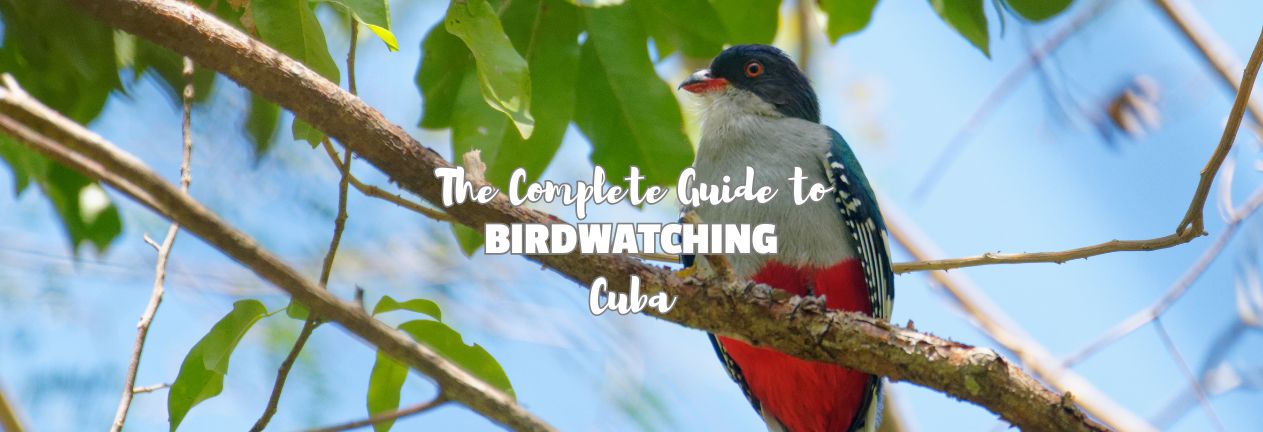
Cuba is one of those places that you wouldn’t automatically choose for birdwatching. Oh you won’t find the flashy market campaigns and Instagram accounts that you do for Costa Rica, but to be honest, that’s one of the attractions. There are very high levels of endemism here, a prime position on major migratory routes, and an extraordinary mix of habitats — wetlands, forests, mountains, mangroves, and coastline — all packed into one main island. This guide to birdwatching in Cuba covers what makes Cuba special for birdwatching, the key endemic species, the best places to go, the best time of year, and what to expect when planning a birding-focused trip here.
THIS POST MAY CONTAIN COMPENSATED AND AFFILIATE LINKS. MORE INFORMATION IN OUR DISCLAIMER
What makes birdwatching in Cuba especially attractive is that it doesn’t require serious trekking or weeks in remote jungle to get to the environment where the birds are. Many of Cuba’s most interesting species are surprisingly accessible, whether you’re staying near Havana, on the cays, or in rural western Cuba. You don’t need to be a seasoned birder either, you’d be surprised at how many people see their first trogon or tody by accident.
PRACTICAL TRAVEL TIPS
- 🛡️ Get Travel Insurance: Civitatis includes medical expenses, repatriation, theft, luggage delays. No deductibles or upfront payments. Get a quote here. .
- 🛂💻 Buy your Cuba eVisa here.
- 🔌 Be ready for the plug, socket & power situation.
- 📶 Internet, maps, data on the go. Buy an eSim for Cuba. Or pre-order a physical SIM card
- 🔒 Do NOT leave home without a VPN. Buy for your trip here.
Birdwatching in Cuba: What Makes It Special
Cuba is home to over 390 recorded bird species, with around 28 endemics. Endemics aren’t present anywhere else around the world. That’s a seriously impressive number both for an island the size of Cuba and considering the situation the country finds itself in today. Cuba is also located in the path of the Atlantic migratory flyway, so you’ll also find it hosts large numbers of North American migrants during the winter months.
Of course, while Cuba is an island country, it is made up of more than 4,000 islands, islets and cays, but the vast majority of the habitat diversity is on the main island, so you could, in just a single trip head to coastal lagoons, freshwater swamps, dry forests, pine forests, cloud forests, and mountain foothills. That variety means excellent species turnover as you move around the country.
And then there is the rather unique situation that Cuba finds itself in. Seriously UNDER touristed, for all aspects of travel here. Compared to Central America or parts of South America, there’s way less pressure on sites, fewer large tour groups, and more chances for quiet, unrushed birding. There is no slick infrastructure, you’ll really have to work to get to visit the locations where the birds are and your on site experts are few and far between. But heck, that’s the appeal right?
Endemic Birds You Can Only See in Cuba
One of the biggest reasons to come birdwatching in Cuba is the sheer range of endemic species. There are 28 of them. These birds exist nowhere else on Earth. Here are 3 of the Cuban endemic birds you can see here.
The Cuban Trogon (Tocororo, Priotelus temnurus)
The Trogon is Cuba’s national bird. You’ll tend to spot it if you spend time in forested areas. The trogon comes from a family of birds that includes the Guatemalan Quetzal. There’s a reason that this bird is the national bird of Cuba, as its tail pattern does look somewhat similar to the Cuban flag! The birds are birght, extremely vocal and generally easy to photograph as they’re not particularly timid or rare. Your challenge will be to get a photo of the 5 stripes on its tail that looks like a Cuban flag.
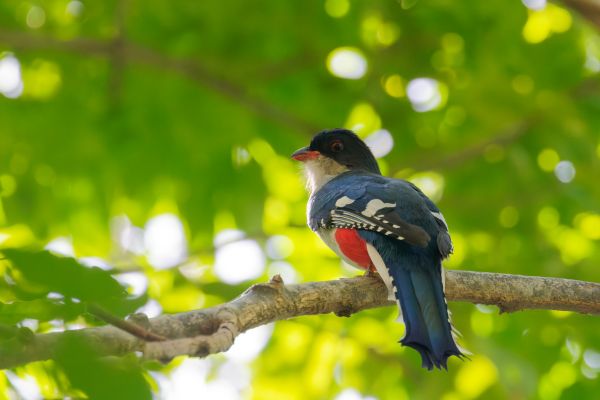
Cuba’s National Bird is also recognized as a symbol of freedom. If its ever cage it throws itself against the bars and generally dies from its injuries such is its desire to be free. The local name of the trogon is the Tocororo.
Where to spot the Cuban Trogon
You’re like to spot the Trogon in
- The Topes de Collantes National Park – my guide to the park is here.
- The Cienaga Zapata (the Zapata swamp)
The best time to spot the Cuban Trogon
The best time to spot the Cuban Trogon is from April to July, during their breeding season
The Cuban Tody (Cartacuba or Pedorrera, Todus multicolor
This tiny bird (its less than 5 centimetres (2 inches) long is a stunning colour and lives along forest edges, near fresh water. It nests in river banks. I mean, to be fair, you look at the phot and think “that can’t be real”, the colors of the Tody are so vibrant.
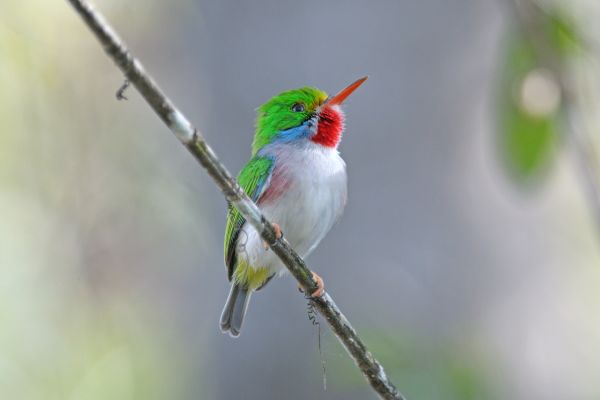
Todys are usually found in pairs, and they’re instantly recognizable based on the relatively large sized head, long bill and short tail. They’re a unique green on top, and have a red throat and size. You’ll hear them likely before you see them, they call with a rather loud “chuk, chuk, chuk, chuk,”. The local name is the “Cartacuba”
Where to spot the Cuban Tody
You’re like to spot the Tody in
- The Topes de Collantes National Park – my guide to the park is here.
- The Cienaga Zapata (the Zapata swamp)
The best time to spot the Cuban Tody
The best time to spot the Cuban Tody is from December to April, March is the beginning of the breeding season and you’ll usually easily spot them then.
The Bee Hummingbird (Zunzuncito, Mellisuga helenae
Cuba is home to the smallest bird in the world, and this bird is probably the primary reason why birders come to Cuba. The bee hummingbird feeds on woodland flowers and there’s a distinct difference between the male and female birds. The male bee hummingbird has an iridescent red head and is turquoise above. The female bee hummingbird is also turquoise above, but less distinct below.
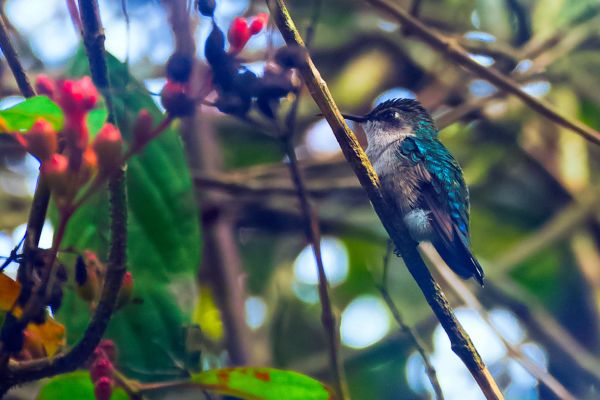
So how small is the world’s smallest bird then? Females weigh around 2.6 grams (0.092 oz) and are 6.1 cm (2 inches) long. The female is slightly larger than the male, which have an average weight of 1.95 grams (0.069 oz) and a length of 5.5 cm (2inches). Their wings make a noise like a bumblebee, hence the name.
Where to spot the Bee Hummingbird
You’re like to spot the Bee Hummingbird in
- The Cienaga Zapata (the Zapata swamp)
- The Sierra del Rosario mountain range in the Pinar del Río Province of Cuba. – my guide to Las Terrazas is here.
- Alexander Humboldt National Park (near Baracoa) – my guide to the park is here.
The best time to spot the Bee Hummingbird in Cuba
The best time to see Bee Hummingbird in Cuba is from February to July.
The Best Places for Birdwatching in Cuba
There are key areas to visit around Cuba where you’re more likely to spot these specific birds and others that are endemic to the country.
The Zapata Swamp
Cienaga Zapata is Cuba’s premier birding destination and one of the most important wetlands in the Caribbean. It’s huge, wild, and packed with species, including several endemics and near-endemics. It’s also relatively easy to get to from Havana and Varadero. You can expect wetlands birds, forest species, and migratory visitors depending on the season. Local guides here are excellent and well worth using — they know the trails, calls, and exact trees birds favor. I recommend connecting with Adrian at Casa Ana to explore this area.
Cayo Coco
Cayo Coco is ideal if you want easy birding, while having a resort holiday and without sacrificing comfort. Flamingos, shorebirds, and waterbirds are everywhere, often right beside resort roads and lagoons. Cayo Coco is a great option for casual birders or photographers, especially during migration season. My guide to Cayo Coco is here.
The Sierra del Rosario Biosphere Reserve
This is close to Havana and perfect for shorter trips, the Sierra del Rosario offers forest birding with a strong chance of seeing several endemics. This is one of the easiest places to combine culture, hiking, and birdwatching without major logistics.
Alejandro de Humboldt National Park
This park is stunning. Remote, rugged, and incredibly biodiverse. It protects some of Cuba’s least disturbed ecosystems and offers excellent birding — but it requires serious planning. First you’ll need to get to Baracoa, and on from there. Access can be challenging, accommodation is basic, and a guide is essential. For serious birders, though, it’s one of Cuba’s most rewarding regions.
Best Time of Year for Birdwatching in Cuba
The best overall period for birdwatching in Cuba is November to April – generally outside of hurricane season. This coincides with peak migration, cooler temperatures, and relatively dry weather.
- Winter (Nov–Mar): Best variety of species, including migrants
- Spring (Apr–May): Breeding activity and vocal birds
- Summer (Jun–Oct): Hot, humid, fewer migrants, hurricane risk (Aug–Oct)
Guided Birdwatching Tours vs Independent Birding
While the casual visitor might pull in a day or two of birding, if you’re serious about seeing any of these endemics, then you’ll want to make plans ahead of time.
Guided Birdwatching Tours
Guides make a huge difference in Cuba. They know calls, nesting sites, and how to navigate protected areas smoothly. For shorter trips or first-time visitors, guided birding is often the most efficient option. You can book a guided bird watching tour with knowledgeable local guides here, with the folks at Cuban Adventures. There’s more on what’s included in this 9 day tour here.
Independent Birdwatching
Independent birding is possible, especially in accessible areas like Cayo Coco or Sierra del Rosario. However, transport, signage, and limited trail information can be challenging without local knowledge. Many travelers end up using a mix: independent birding some days, local guides on others. A great option is to connect with Adrian at Casa Ana to arrange a day trip from Playa Larga, right on the doorstep of Cienaga Zapata.
Practical Tips for Birdwatching in Cuba
- Bring good binoculars — renting locally isn’t realistic at all
- Download field guides and apps before arrival (offline access matters)
- Expect early starts: birds don’t wait for Cuban breakfast schedules
- Transport takes a LOT of time in Cuba — build buffer days into your plan
- Respect protected areas and local regulations
CUBA TRAVEL RESOURCES
CUBA BY BUS EBOOK
Buy our Ebook. Preplanned itineraries, themed routes, exact instructions for an easy visit.
Buy Cuba by Bus
BEST
CASA PARTICULARS
See choices here
Luxury rooms? Budget rooms? Laundry? Best room choice & Great hosts.
TOURS & ATTRACTIONS
Top daytrips, small group tours, tickets, pay online easily with free cancellation and top local guides.
Top options here.
TRANSFERS & TAXIS
Read my Guide
Go from A to B easily. Sightsee along the way. Maximise your time in Cuba.
Final Words on Birdwatching in Cuba
Cuba may not be the easiest birding destination in the Caribbean, its tough to get here, tough to get around, but it’s one of the most memorable. With realistic expectations, good planning, and a flexible attitude, birdwatching in Cuba can easily become a highlight of your trip.
Cuba’s Best is a participant in the Amazon Services LLC Associates Program, an affiliate advertising program designed to provide a means for sites to earn advertising fees by advertising and linking to amazon.com, amazon.co.uk, amazon.ca. Amazon and the Amazon logo are trademarks of Amazon.com, Inc. or its affiliates.
